
ADAR Antibody: A Key Research Tool for Studying RNA Editing and Gene Expression
Introduction to RNA Editing and ADAR Proteins
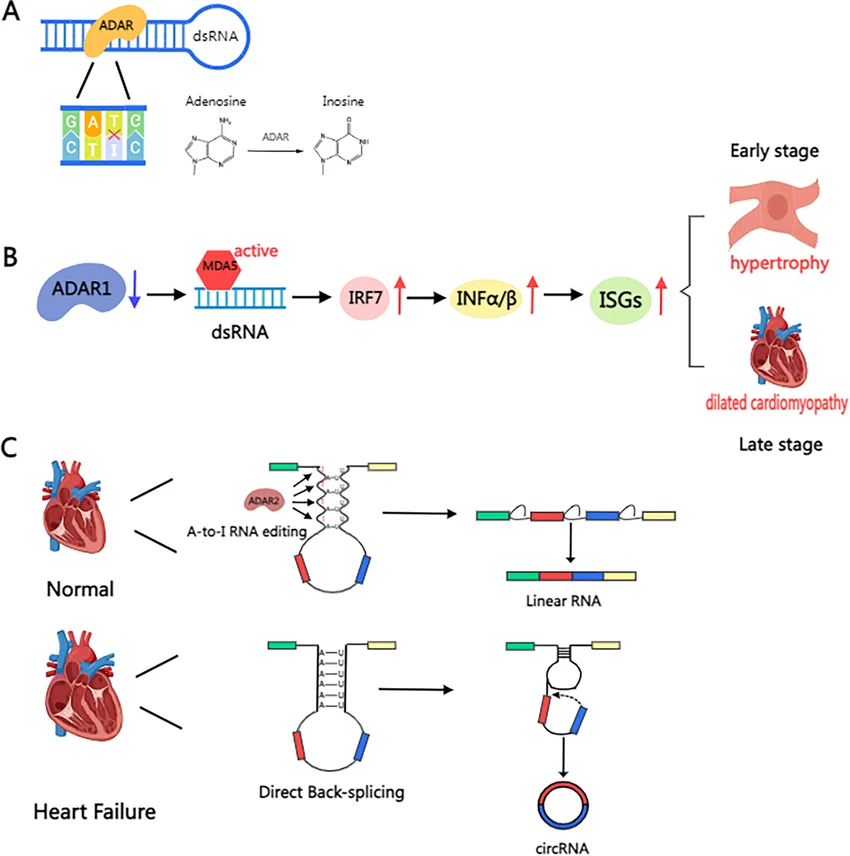
RNA editing is a fundamental molecular biology process that contributes to transcript diversity in many organisms. One of the most well-characterized RNA editing mechanisms involves the enzymatic conversion of adenosine (A) to inosine (I) in RNA molecules. This biochemical modification is catalyzed by enzymes belonging to the adenosine deaminase acting on RNA (ADAR) protein family.
Researchers studying RNA processing, transcriptomics, and gene expression regulation frequently rely on ADAR antibodies to detect and analyze ADAR proteins in biological samples. These antibodies enable detailed investigation of RNA editing enzymes and their role in cellular RNA metabolism.
A comprehensive overview of RNA editing and transcriptomic regulation can be explored through educational resources from the National Center for Biotechnology Information (NCBI)
https://www.ncbi.nlm.nih.gov/
Background information on genome research and gene regulation is also available through the National Human Genome Research Institute (NHGRI)
https://www.genome.gov/
Further resources discussing RNA biology and gene expression mechanisms can be found at the National Library of Medicine
https://www.nlm.nih.gov/
These foundational resources highlight how RNA editing contributes to gene regulation, transcript diversity, and post-transcriptional control mechanisms.
What is ADAR?
ADAR proteins belong to a family of enzymes responsible for editing RNA molecules by converting adenosine into inosine within double-stranded RNA regions. This modification can influence RNA structure, translation efficiency, and gene expression.
The ADAR family typically includes three major members:
-
ADAR1
-
ADAR2
-
ADAR3
Each protein contains double-stranded RNA-binding domains and a catalytic deaminase domain that performs the editing reaction.
Scientific descriptions of RNA editing enzymes are available through the National Institutes of Health (NIH)
https://www.nih.gov/
Additional molecular biology background can be found through the University of Utah Genetics Learning Center
https://learn.genetics.utah.edu/
Genome annotation projects studying RNA editing sites are also documented by the UCSC Genome Browser
https://genome.ucsc.edu/
Because ADAR enzymes influence transcript structure and gene regulation, their detection and characterization are essential for many areas of molecular biology research.
RNA Editing and Transcriptome Diversity
RNA editing contributes to the diversity of the transcriptome by altering RNA sequences after transcription. The A-to-I editing process catalyzed by ADAR proteins can change codons, modify RNA stability, or influence RNA-protein interactions.
Large RNA editing datasets are available through public genomic databases such as the Gene Expression Omnibus (GEO) hosted by NCBI
https://www.ncbi.nlm.nih.gov/geo/
Sequence data used for transcriptomic studies can also be accessed through the Sequence Read Archive (SRA)
https://www.ncbi.nlm.nih.gov/sra/
Researchers analyzing transcriptomes frequently integrate RNA sequencing with molecular assays to confirm protein expression.
Comprehensive transcriptomic resources are also provided by the ENCODE Project Consortium
https://www.encodeproject.org/
The ENCODE project provides genome-wide datasets that help researchers understand regulatory elements and RNA processing mechanisms.
Educational explanations of gene expression and RNA regulation can also be found through Harvard University’s Department of Molecular and Cellular Biology
https://mcb.harvard.edu/
What is an ADAR Antibody?
An ADAR antibody is a laboratory reagent designed to bind specifically to ADAR proteins. These antibodies are used in molecular biology experiments to detect, quantify, and visualize RNA editing enzymes.
Antibody-based detection methods are essential tools in protein analysis. Detailed explanations of antibody technologies can be found through the National Institute of General Medical Sciences (NIGMS)
https://www.nigms.nih.gov/
Additional immunology and antibody information is available through the National Institute of Allergy and Infectious Diseases (NIAID)
https://www.niaid.nih.gov/
Using ADAR antibodies, researchers can examine protein expression patterns, investigate subcellular localization, and analyze RNA-protein interactions involved in RNA editing pathways.
Experimental Applications of ADAR Antibodies
ADAR antibodies are widely used in molecular biology laboratories to investigate RNA editing enzymes. These antibodies support multiple experimental techniques that enable detailed characterization of protein expression.
Western Blot Analysis
Western blotting is a standard technique for detecting specific proteins in cell lysates or tissue extracts. ADAR antibodies allow researchers to identify ADAR proteins based on their molecular weight and expression levels.
Protein detection methods are described in detail by Cold Spring Harbor Laboratory educational resources
https://www.cshl.edu/
Western blot analysis provides information about protein abundance and can help compare ADAR expression across different cell types or experimental conditions.
Additional protein analysis resources are available through the University of California Berkeley Molecular Biology resources
https://mcb.berkeley.edu/
Immunofluorescence Microscopy
Immunofluorescence is used to visualize the localization of proteins within cells. When an ADAR antibody is combined with fluorescent secondary antibodies, researchers can observe the distribution of RNA editing enzymes inside cellular compartments.
Microscopy techniques used in molecular biology are explained by the National Institutes of Health Imaging resources
https://www.nih.gov/
Advanced cellular imaging techniques are also described by Stanford University’s Bioengineering Department
https://bioengineering.stanford.edu/
Using immunofluorescence microscopy, scientists can determine whether ADAR proteins localize in the nucleus, cytoplasm, or specific cellular structures.

Immunoprecipitation and Protein Interaction Studies
Immunoprecipitation techniques allow researchers to isolate ADAR proteins and study the molecules interacting with them. This approach helps identify RNA molecules or protein partners involved in RNA editing complexes.
Protein interaction networks can be explored through the BioGRID interaction database supported by NIH funding
https://thebiogrid.org/
Additional molecular interaction resources are provided by the National Institute of Standards and Technology (NIST)
https://www.nist.gov/
These tools allow scientists to map protein interaction networks and investigate molecular pathways related to RNA editing.
ADAR Antibodies in Transcriptomics and RNA Research
Modern transcriptomics and sequencing technologies have greatly expanded the study of RNA editing. Researchers frequently combine sequencing methods with antibody-based protein detection to study gene expression regulation.
Common experimental techniques used alongside ADAR antibodies include:
-
RNA sequencing
-
qPCR gene expression analysis
-
molecular cloning
-
protein detection assays
-
transcriptome profiling
Educational explanations of PCR technologies can be found through MIT OpenCourseWare
https://ocw.mit.edu/
Additional genomic technologies are discussed by the National Science Foundation Biological Sciences Directorate
https://www.nsf.gov/
By integrating sequencing data with protein detection methods, researchers can gain a comprehensive understanding of RNA editing pathways.
Characteristics of High-Quality ADAR Antibodies
Selecting a reliable antibody is essential for reproducible experimental results. Several characteristics are commonly considered when evaluating antibodies used in molecular biology research.
Specificity
The antibody should recognize the ADAR protein with minimal cross-reactivity to other proteins.
Sensitivity
High-sensitivity antibodies allow detection of low-abundance proteins in complex biological samples.
Application Validation
Well-characterized antibodies are validated for applications such as Western blot, immunofluorescence, or immunoprecipitation.
Reproducibility
Consistent antibody performance across experiments supports reliable experimental outcomes.
Guidelines for antibody validation are available through the NIH Antibody Initiative
https://commonfund.nih.gov/antibodies
Further recommendations for antibody research standards are discussed by the National Cancer Institute
https://www.cancer.gov/
Research Areas Where ADAR Antibodies Are Used
ADAR antibodies support research across multiple areas of molecular and cellular biology.
RNA Editing Studies
Researchers use ADAR antibodies to investigate the molecular mechanisms underlying RNA editing and transcript regulation.
Functional Genomics
Detection of ADAR proteins contributes to studies examining gene expression patterns and regulatory networks.
Molecular Biology Research
ADAR antibodies help characterize RNA processing pathways and protein-RNA interactions.
Developmental Biology
RNA editing enzymes are also studied in developmental gene regulation processes.
Educational resources discussing gene regulation are available through Yale University’s Molecular Biophysics and Biochemistry Department
https://mbb.yale.edu/
Additional information about molecular biology research can be found through the University of Washington Genome Sciences Department
https://www.gs.washington.edu/
Integrating ADAR Antibody Research with Molecular Biology Workflows
Laboratories studying RNA editing frequently integrate ADAR antibody detection with additional molecular biology tools. These tools support experiments that analyze gene expression and RNA processing mechanisms.
Typical reagents used in RNA editing workflows include:
-
qPCR master mixes for transcript quantification
-
RNA extraction kits for transcript isolation
-
molecular cloning kits for gene fragment analysis
-
competent cells for plasmid propagation
-
DNA purification systems for sequencing preparation
Educational molecular biology protocols can be explored through the University of Massachusetts Medical School RNA research resources
https://www.umassmed.edu/
Additional research protocols are also described by Pennsylvania State University’s Department of Biochemistry and Molecular Biology
https://science.psu.edu/bmb
Combining these experimental tools allows researchers to analyze RNA editing processes at multiple levels, from transcriptome analysis to protein detection.
Future Perspectives in RNA Editing Research
Advances in high-throughput sequencing, structural biology, and molecular genetics continue to expand the study of RNA editing enzymes. ADAR proteins remain central to these investigations because of their role in modifying RNA sequences and regulating transcript structure.
Emerging technologies such as single-cell transcriptomics, RNA structure analysis, and high-resolution microscopy are enabling more detailed exploration of RNA regulatory networks.
Resources on emerging genomics technologies can be found through the Broad Institute of MIT and Harvard
https://www.broadinstitute.org/
Additional RNA research initiatives are supported by the National Institutes of Health Human Genome Research Institute
https://www.genome.gov/
These advances continue to highlight the importance of molecular tools such as ADAR antibodies for studying RNA editing and transcript regulation.
Conclusion
The ADAR Antibody is an essential research reagent for studying RNA editing enzymes and their role in gene expression regulation. By enabling detection of ADAR proteins through techniques such as Western blotting, immunofluorescence, and immunoprecipitation, these antibodies support a wide range of molecular biology investigations.
As transcriptomics and sequencing technologies continue to evolve, ADAR antibodies remain valuable tools for exploring RNA editing pathways, transcriptome diversity, and RNA regulatory networks. Through integration with modern molecular biology workflows, these antibodies help researchers gain deeper insights into the complex mechanisms governing RNA biology.