
APOE ELISA Kits: Sensitive Immunoassays for Apolipoprotein E Quantification in Molecular Biology Research
Introduction
Apolipoprotein E (APOE) is a multifunctional protein that plays a key role in lipid metabolism, cholesterol transport, and cellular signaling. Because of its biological importance, APOE has become a widely studied molecule in biochemistry, neuroscience, molecular biology, and lipid metabolism research.
To accurately measure APOE levels in biological samples, researchers frequently use APOE ELISA Kits, which provide a sensitive and quantitative immunoassay platform based on enzyme-linked immunosorbent assay (ELISA) technology.
These kits enable precise detection of APOE protein concentrations in a variety of sample types including serum, plasma, tissue lysates, and cell culture supernatants, making them valuable tools for experimental studies involving lipid transport proteins and cellular metabolism.
Background information about lipoproteins, apolipoproteins, and molecular lipid transport mechanisms can be explored through educational and scientific resources such as:
-
National Institutes of Health — https://www.nih.gov
-
National Center for Biotechnology Information — https://www.ncbi.nlm.nih.gov
-
National Human Genome Research Institute — https://www.genome.gov
-
National Institute of General Medical Sciences — https://www.nigms.nih.gov
-
Harvard University Department of Molecular and Cellular Biology — https://mcb.harvard.edu
Using high-specificity antibodies and optimized assay protocols, APOE ELISA kits allow researchers to study protein expression and distribution across different biological systems.
Understanding Apolipoprotein E (APOE)
Apolipoprotein E (APOE) is a glycoprotein that belongs to the apolipoprotein family and is primarily involved in lipid transport and lipoprotein metabolism. The protein is produced mainly by liver cells, macrophages, and astrocytes, and it circulates in association with lipoprotein particles such as:
-
very-low-density lipoproteins (VLDL)
-
chylomicron remnants
-
high-density lipoproteins (HDL)
Educational information describing lipoprotein metabolism and apolipoprotein biology is available through several academic and government research institutions:
-
National Library of Medicine — https://www.ncbi.nlm.nih.gov/books/
-
National Heart, Lung, and Blood Institute — https://www.nhlbi.nih.gov
-
University of Utah Genetic Science Learning Center — https://learn.genetics.utah.edu
-
Stanford University Department of Genetics — https://med.stanford.edu/genetics.html
APOE plays a major role in mediating interactions between lipoproteins and cell surface receptors, facilitating lipid transport and cellular uptake.
APOE Isoforms and Genetic Variants
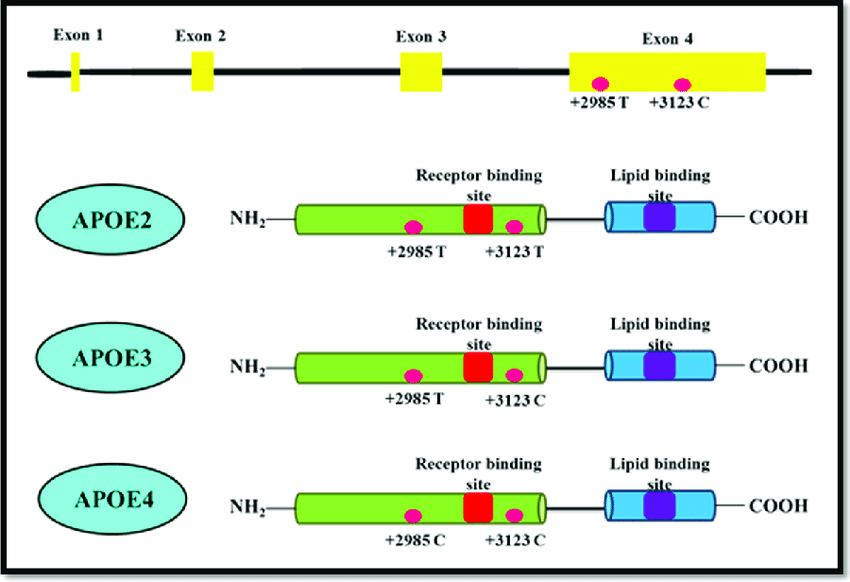
One of the most interesting features of APOE biology is the presence of three major protein isoforms, which arise from genetic variation in the APOE gene.
The three common isoforms include:
-
APOE2
-
APOE3
-
APOE4
These isoforms differ by small amino acid substitutions that influence protein structure and receptor interactions.
Scientific descriptions of APOE genetics and protein variants are available through resources such as:
-
National Human Genome Research Institute — https://www.genome.gov/genetics-glossary/Gene
-
National Library of Medicine Genetics Home Reference — https://medlineplus.gov/genetics/
-
University of Washington Genome Sciences Department — https://www.gs.washington.edu
Because these isoforms can influence protein behavior and cellular lipid transport processes, researchers frequently measure APOE expression in experimental systems.
What Are APOE ELISA Kits?
APOE ELISA kits are immunoassay systems designed to quantitatively measure apolipoprotein E protein levels using enzyme-linked immunosorbent assay technology.
ELISA is a widely used analytical technique that detects specific proteins through antibody-antigen interactions combined with enzyme-generated signals.
Educational explanations of ELISA methodology can be found in scientific resources such as:
-
National Institute of Allergy and Infectious Diseases — https://www.niaid.nih.gov
-
Centers for Disease Control laboratory science resources — https://www.cdc.gov/labs
-
U.S. Food and Drug Administration research programs — https://www.fda.gov/science-research
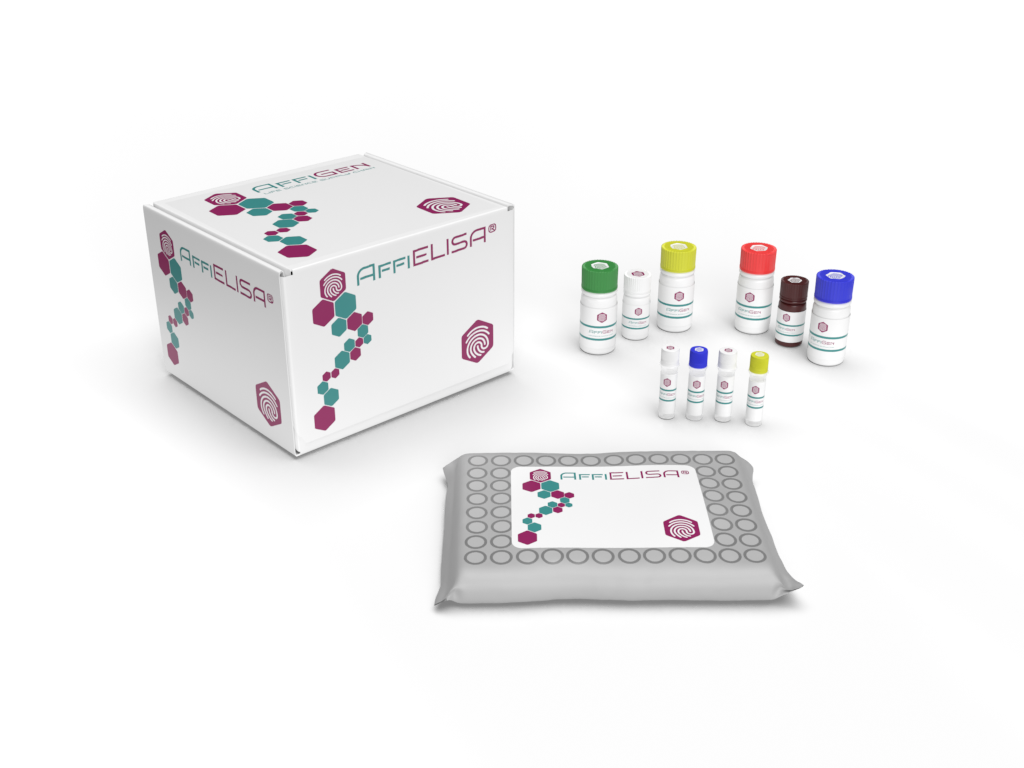
Most APOE ELISA kits contain:
-
pre-coated microplate wells
-
capture antibodies specific to APOE
-
detection antibodies
-
enzyme conjugates (commonly HRP)
-
chromogenic substrates
-
calibration standards
These components allow accurate quantification of APOE concentrations in experimental samples.
Principle of the APOE ELISA Assay
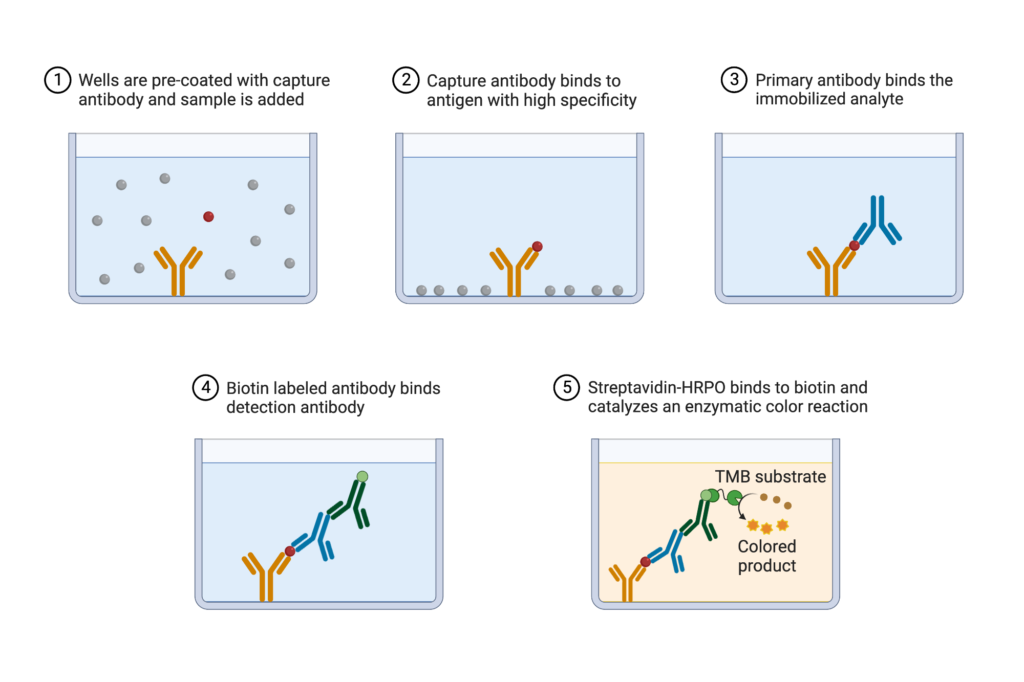
Most APOE ELISA kits operate using a sandwich ELISA format, which relies on two antibodies recognizing distinct regions of the APOE protein.
The typical assay process includes:
-
Capture antibodies coated on the microplate bind APOE present in the sample.
-
A detection antibody binds the captured protein.
-
An enzyme-linked reagent produces a colorimetric signal.
-
Addition of substrate leads to color development.
-
Absorbance is measured using a microplate reader at approximately 450 nm.
The intensity of the signal is proportional to the concentration of APOE protein in the sample.
Additional laboratory training materials describing immunoassay techniques are available from:
-
National Institutes of Health research training resources — https://www.nih.gov/research-training
-
University of Wisconsin Biotechnology Center — https://www.biotech.wisc.edu
Biological Samples Compatible with APOE ELISA Kits
APOE ELISA assays can be used with several types of biological samples.
Commonly analyzed materials include:
• serum samples
• plasma samples
• cell culture supernatants
• tissue lysates
• brain tissue extracts
• purified protein preparations
Because ELISA assays require relatively small sample volumes, they are suitable for routine laboratory analysis of protein expression levels.
Research Applications of APOE ELISA Kits
APOE ELISA assays are widely used across many research fields involving lipid metabolism and protein expression.
1. Lipoprotein and Lipid Metabolism Research
APOE is a key component of lipoprotein particles involved in lipid transport.
Researchers studying lipid metabolism pathways frequently measure APOE protein levels in experimental systems.
Educational resources describing lipid transport biology include:
-
National Heart, Lung, and Blood Institute — https://www.nhlbi.nih.gov
-
National Institute of Diabetes and Digestive and Kidney Diseases — https://www.niddk.nih.gov
-
Harvard School of Public Health lipid metabolism research — https://www.hsph.harvard.edu
2. Neuroscience and Brain Biology Studies
APOE is also expressed in the central nervous system, where it participates in lipid transport and neuronal maintenance.
Astrocytes are a major source of APOE within the brain, contributing to lipid distribution and cellular signaling.
Research programs investigating brain lipid biology include:
-
Johns Hopkins Neuroscience — https://neuroscience.jhu.edu
-
Stanford Neuroscience Institute — https://neuroscience.stanford.edu
-
Harvard Brain Science Initiative — https://brain.harvard.edu
3. Protein Expression and Cellular Signaling Research
APOE expression can be analyzed in various cell models to study protein synthesis, secretion, and cellular signaling pathways.
ELISA assays allow researchers to monitor APOE levels in:
-
cell culture experiments
-
gene expression studies
-
lipid transport models
-
protein secretion studies
Educational materials describing cellular protein synthesis are available through:
-
National Institute of General Medical Sciences — https://www.nigms.nih.gov
-
Massachusetts Institute of Technology Biology Department — https://biology.mit.edu
Advantages of APOE ELISA Kits
Modern ELISA systems provide several technical advantages for protein quantification.
High Sensitivity
Antibody-based detection allows measurement of very low protein concentrations.
Quantitative Analysis
Standard curves provide accurate measurement of APOE levels.
High Throughput
96-well microplate formats enable analysis of many samples simultaneously.
Reproducibility
Optimized reagents and validated antibodies support reliable assay performance.
Compatibility with Multiple Sample Types
APOE ELISA assays can analyze diverse biological samples including biological fluids and tissue extracts.
Typical Workflow of an APOE ELISA Experiment
A standard APOE ELISA experiment typically involves the following steps:
-
Preparation of calibration standards and samples
-
Addition of samples to antibody-coated wells
-
Incubation with detection antibodies
-
Washing to remove unbound components
-
Addition of enzyme-linked reagents
-
Substrate reaction for color development
-
Measurement of absorbance using a microplate reader
-
Calculation of APOE concentration using a standard curve
This workflow enables reliable protein quantification within a relatively short experimental timeframe.
Integration With Other Molecular Biology Techniques
In many laboratories, APOE ELISA assays are combined with other analytical techniques to obtain comprehensive data.
Examples include:
• Western blot analysis
• quantitative PCR (qPCR)
• immunohistochemistry
• mass spectrometry
• transcriptomics analysis
Combining these approaches allows researchers to explore APOE expression, regulation, and molecular interactions in biological systems.
Conclusion
APOE ELISA Kits are powerful immunoassay tools used to quantify apolipoprotein E in biological samples.
By using antibody-based detection methods, these assays enable sensitive measurement of APOE protein levels across diverse experimental systems, including lipid metabolism studies, neuroscience research, and protein expression analysis.
Because of their high sensitivity, reproducibility, and compatibility with multiple sample types, APOE ELISA assays remain widely used in molecular biology laboratories investigating lipid transport proteins and cellular signaling pathways.