
Channel Protein Antibodies: Essential Tools for Studying Membrane Transport and Cellular Signaling
Introduction to Channel Protein Antibodies
Channel proteins play a central role in cellular physiology by regulating the movement of ions and molecules across biological membranes. These proteins form specialized pores within the lipid bilayer that allow selective passage of ions such as sodium, potassium, calcium, and chloride. Because of their critical function in cellular communication and membrane transport, channel proteins are widely studied in fields such as cell biology, neurobiology, electrophysiology, molecular biology, and membrane biochemistry.
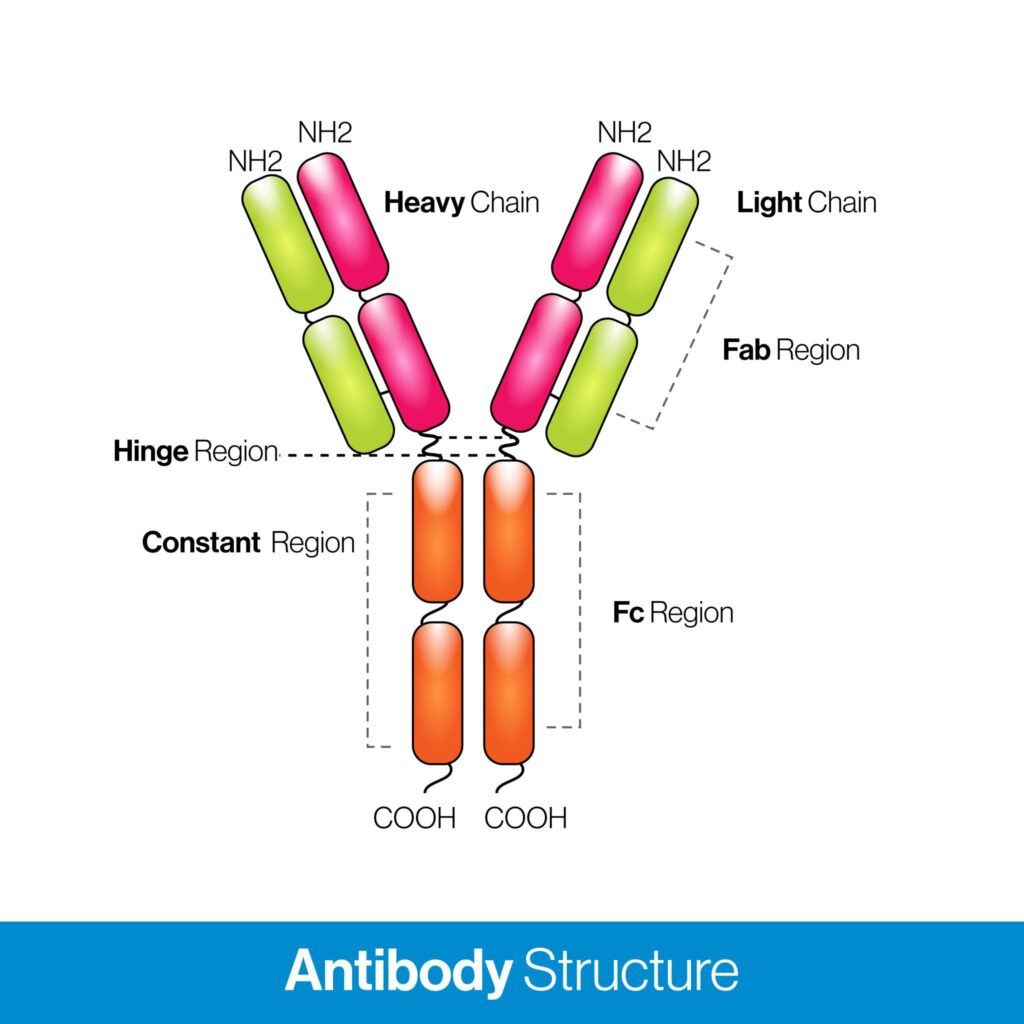
To analyze the expression, localization, and molecular characteristics of these proteins, scientists rely on channel protein antibodies, which are highly specific immunological reagents designed to recognize and bind ion channel proteins.
Research antibodies targeting channel proteins are widely used in techniques such as Western blotting, immunohistochemistry (IHC), immunofluorescence (IF), ELISA assays, immunoprecipitation (IP), and flow cytometry. These antibodies allow researchers to investigate ion channel expression patterns, protein interactions, and cellular localization in diverse biological systems.
Comprehensive educational information on membrane proteins and ion channels can be explored through the National Center for Biotechnology Information (NCBI):
https://www.ncbi.nlm.nih.gov/
Additional molecular biology resources are available from the National Institutes of Health (NIH):
https://www.nih.gov/
Detailed explanations of ion channel structure and function are also provided by the University of California Berkeley Molecular and Cell Biology Program:
https://mcb.berkeley.edu/
What Are Channel Proteins?
Channel proteins are transmembrane proteins that form pores within the cell membrane, allowing ions or small molecules to pass through the membrane in a controlled manner. These proteins are essential for maintaining cellular homeostasis and enabling physiological signaling processes.
Ion channels are typically classified based on the type of ion they conduct or the mechanism by which they open and close.
Common categories include:
-
Voltage-gated ion channels
-
Ligand-gated ion channels
-
Mechanically gated ion channels
-
Leak channels
Educational resources explaining ion channel biology are available through the National Institute of General Medical Sciences:
https://www.nigms.nih.gov/
Detailed information about membrane transport systems can also be found at the University of Texas Medical Branch Cell Biology Department:
https://www.utmb.edu/
Additional structural insights into membrane channels are provided by the Protein Data Bank (PDB):
https://www.rcsb.org/
Structure and Function of Ion Channel Proteins
Ion channel proteins are typically composed of multiple transmembrane domains forming a central pore that allows selective ion transport. The opening and closing of these channels, known as gating, is tightly regulated by cellular signals.
Important structural features include:
-
Transmembrane helices
-
Ion selectivity filters
-
Voltage-sensing domains
-
Regulatory intracellular domains
High-resolution structures of ion channels can be explored through the National Institute of General Medical Sciences Structural Biology resources:
https://www.nigms.nih.gov/education
Structural protein databases maintained by research institutions such as Rutgers University’s RCSB Protein Data Bank also provide detailed molecular models:
https://www.rcsb.org/
Further educational information on membrane protein structure is available through Harvard University’s Department of Molecular and Cellular Biology:
https://mcb.harvard.edu/
Channel Protein Antibodies in Research
Channel protein antibodies are designed to recognize specific epitopes on membrane channel proteins. These antibodies enable the detection and characterization of ion channels in biological samples.
Researchers frequently use channel protein antibodies to study:
-
Ion channel expression in tissues
-
Cellular localization of membrane proteins
-
Protein-protein interactions
-
Regulation of ion transport systems
Scientific literature on ion channel proteins can be accessed through the U.S. National Library of Medicine (PubMed):
https://pubmed.ncbi.nlm.nih.gov/
Research programs focused on membrane protein biology are also supported by the National Science Foundation (NSF):
https://www.nsf.gov/
Types of Channel Protein Antibodies
Polyclonal Channel Protein Antibodies
Polyclonal antibodies are generated from multiple B-cell clones and recognize several epitopes on the same protein.
Advantages include:
-
Strong signal detection
-
High sensitivity
-
Broad epitope recognition
Educational explanations of antibody production can be found at the Iowa State University Biotechnology Program:
https://www.biotech.iastate.edu/
Monoclonal Channel Protein Antibodies
Monoclonal antibodies originate from a single immune cell clone and recognize a single epitope with high specificity.
Benefits include:
-
High experimental reproducibility
-
Precise molecular recognition
-
Consistent antibody batches
The principles behind monoclonal antibody technology are described by the Nobel Prize Foundation:
https://www.nobelprize.org/
Additional educational material on hybridoma technology is available from the Stanford University School of Medicine:
https://med.stanford.edu/
Recombinant Channel Protein Antibodies
Recombinant antibodies are produced using genetic engineering technologies, allowing scientists to design antibodies with defined sequences.
Advantages include:
-
High reproducibility
-
Advanced antibody engineering
-
Controlled production processes
Recombinant protein engineering concepts are described by MIT OpenCourseWare:
https://ocw.mit.edu/
Additional research funding initiatives related to protein engineering are described by the National Science Foundation:
https://www.nsf.gov/
Applications of Channel Protein Antibodies
Channel protein antibodies support many experimental methods used to analyze membrane proteins.
Western Blot Analysis
Western blotting allows the detection of ion channel proteins in cell lysates after electrophoretic separation.
Workflow typically includes:
-
Protein extraction
-
Electrophoresis separation
-
Transfer to membrane
-
Antibody-based detection
Educational laboratory protocols can be found at Cold Spring Harbor Laboratory:
https://www.cshl.edu/
Electrophoresis methods are also described by the National Institute of Biomedical Imaging and Bioengineering:
https://www.nibib.nih.gov/
Immunofluorescence and Cellular Localization
Immunofluorescence microscopy uses labeled antibodies to visualize channel proteins within cells.
This technique allows researchers to study:
-
Membrane localization
-
Subcellular distribution
-
Protein trafficking
Educational microscopy resources are available through the National Cancer Institute:
https://www.cancer.gov/
Advanced imaging resources can also be found through the University of Arizona Imaging Core:
https://imaging.arizona.edu/
Immunohistochemistry (IHC)
Immunohistochemistry enables the detection of ion channel proteins directly in tissue sections.
Applications include:
-
Tissue-level protein mapping
-
Cellular localization studies
-
Comparative expression analysis
Histological resources and research tools are available via Yale School of Medicine:
https://medicine.yale.edu/
Flow Cytometry
Flow cytometry allows quantitative analysis of channel protein expression in individual cells using fluorescent antibodies.
Applications include:
-
Cell population analysis
-
Membrane protein profiling
-
Protein expression measurement
Educational cytometry resources are available through the Stanford FACS Facility:
https://facs.stanford.edu/
Additional cytometry resources can be found through the University of Arizona Cytometry Core:
https://cytometry.arizona.edu/
Ion Channel Research and Proteomics
Ion channel proteins are studied extensively in proteomics and molecular biology to better understand cellular signaling and membrane transport.
Researchers often investigate:
-
Voltage-gated sodium channels
-
Potassium channels
-
Calcium channels
-
Chloride channels
Large-scale protein expression datasets are available through the Human Protein Atlas project:
https://www.proteinatlas.org/
Additional proteomics initiatives can be explored via the NIH Common Fund Proteomics Program:
https://commonfund.nih.gov/proteomics
Advances in Ion Channel Antibody Development
Recent advances in antibody engineering have enabled the development of improved antibodies for membrane protein research.
Emerging technologies include:
-
Single-chain antibody fragments (scFv)
-
Nanobody technology
-
Phage display antibody libraries
-
Recombinant antibody engineering
Research on nanobody technologies can be explored through the European Molecular Biology Laboratory (EMBL):
https://www.embl.org/
Phage display antibody engineering is described in publications from the University of Cambridge Department of Biochemistry:
https://www.bioc.cam.ac.uk/
Selecting Channel Protein Antibodies for Research
Choosing reliable antibodies is essential for studying ion channel proteins accurately.
Important factors include:
Specificity
Antibodies must bind specifically to the target channel protein.
Protein annotation resources are available through the European Bioinformatics Institute:
https://www.ebi.ac.uk/
Affinity
High-affinity antibodies improve signal detection and experimental sensitivity.
Protein interaction studies are described by the National Institute of General Medical Sciences:
https://www.nigms.nih.gov/
Reproducibility
Reliable antibody reagents support consistent experimental outcomes.
Scientific reproducibility initiatives are discussed by the National Science Foundation:
https://www.nsf.gov/
Channel Protein Antibodies in Modern Biotechnology
Channel protein antibodies remain essential tools for studying membrane transport, cellular signaling, and ion channel regulation. These antibodies support experimental workflows in many research areas including:
-
Molecular biology
-
Neuroscience research
-
Membrane protein biochemistry
-
Electrophysiology
-
Cellular signaling analysis
As research into membrane transport proteins continues to expand, channel protein antibodies will remain important reagents supporting the study of biological membranes and ion channel function.