
Competitive Inhibition ELISA Kits: Principles, Applications, and Advantages in Immunoassay Research
Competitive Inhibition ELISA Kits are widely used laboratory immunoassays designed for the detection and quantification of small antigens, metabolites, hormones, toxins, and other molecular targets that are difficult to measure using conventional sandwich ELISA formats. Because many analytes contain only a single antibody-binding epitope, competitive ELISA methods provide a reliable analytical strategy for studying these molecules in biochemical, molecular biology, environmental, and biotechnology research settings.
Competitive ELISA technology has become an essential analytical tool across multiple research disciplines. Many academic laboratories and biotechnology platforms rely on this immunoassay format for studying molecular interactions, antigen recognition, and quantitative detection of diverse biological compounds.
Educational resources explaining the immunological and biochemical foundations of ELISA techniques can be explored through institutions such as the National Institutes of Health (https://www.nih.gov), National Institute of General Medical Sciences (https://www.nigms.nih.gov), and the National Institute of Biomedical Imaging and Bioengineering (https://www.nibib.nih.gov). Universities also provide extensive methodological resources, including the Harvard Immunology Program (https://immunology.hms.harvard.edu), the Stanford Department of Immunology (https://med.stanford.edu/immunology.html), and the University of California San Diego Molecular Biology Program (https://biology.ucsd.edu).Understanding Competitive Inhibition ELISA
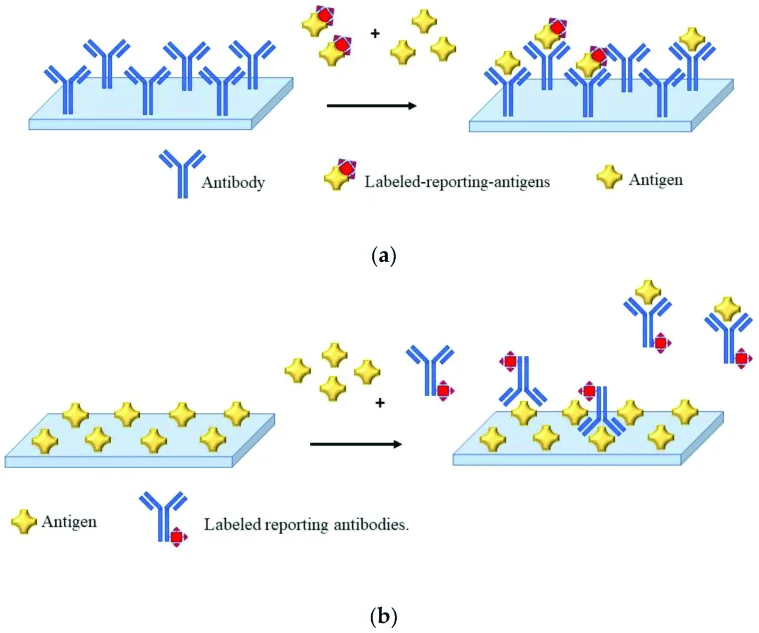
Competitive inhibition ELISA is based on the principle that an antigen present in the sample competes with a labeled antigen for binding to a limited number of antibody-binding sites. The resulting signal intensity is inversely proportional to the concentration of the target molecule.
In this format, the assay signal decreases when the concentration of the analyte increases, because more antibody-binding sites are occupied by the sample antigen rather than the labeled detection antigen.
Comprehensive explanations of immunoassay principles can be found in open educational resources such as:
-
National Center for Biotechnology Information (NCBI) – https://www.ncbi.nlm.nih.gov/books/
-
National Library of Medicine – https://www.nlm.nih.gov
-
Centers for Disease Control and Prevention Laboratory Training Resources – https://www.cdc.gov/labtraining
-
National Science Foundation Biological Sciences Directorate – https://www.nsf.gov/bio/
-
National Institute of Allergy and Infectious Diseases Research Programs – https://www.niaid.nih.gov/research
-
Genome Research Institute – https://www.genome.gov
These resources describe the antibody–antigen interactions and assay detection mechanisms that form the basis of ELISA-based technologies.
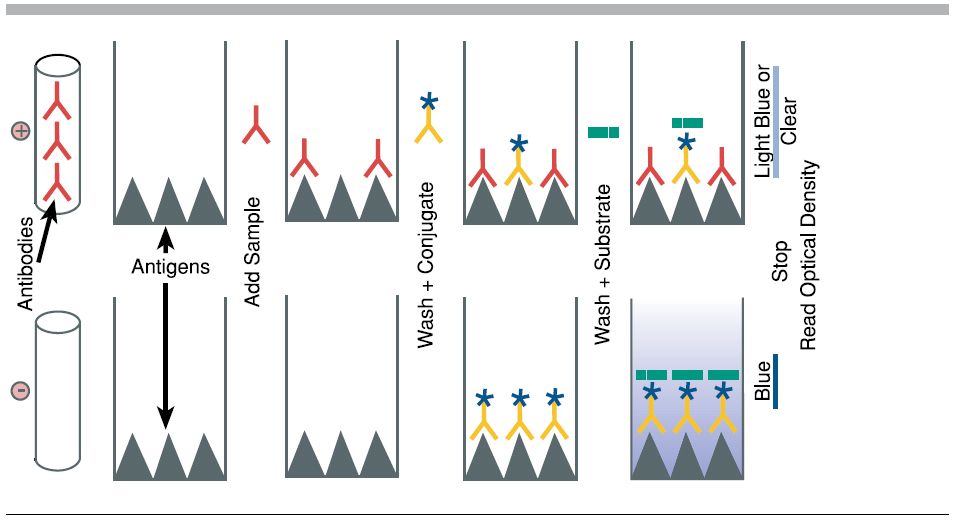
Mechanism and Workflow of Competitive ELISA Assays
Competitive ELISA kits typically follow a well-defined experimental workflow designed to ensure reliable and reproducible quantitative measurements.
1. Plate Coating
Microplate wells are coated with antigen conjugates or capture antibodies depending on the assay configuration.
2. Sample Incubation
Samples containing the target antigen are introduced into the plate together with enzyme-labeled antigen.
3. Antigen Competition
The sample antigen competes with the labeled antigen for antibody binding sites.
4. Washing Steps
Unbound molecules are removed through washing procedures to ensure specificity.
5. Enzyme Reaction
A chromogenic substrate reacts with the enzyme label to generate a detectable signal.
6. Signal Detection
Absorbance values are measured using a microplate reader, and a standard curve is generated to quantify the analyte concentration.
Detailed descriptions of enzyme-linked immunoassay detection technologies are available from:
-
U.S. Food and Drug Administration Research Programs – https://www.fda.gov/science-research
-
National Institute of Standards and Technology Biosystems Division – https://www.nist.gov/programs-projects
-
U.S. Geological Survey Science Resources – https://www.usgs.gov
-
Environmental Protection Agency Research Programs – https://www.epa.gov/research
Key Characteristics of Competitive Inhibition ELISA Kits
Modern competitive ELISA kits are developed with optimized immunochemical components and standardized reagents that support consistent assay performance across laboratories.
Typical characteristics include:
-
Pre-coated microplate wells
-
High-affinity monoclonal or polyclonal antibodies
-
Enzyme-linked detection systems
-
Stable calibration standards
-
Optimized buffers and washing reagents
-
Colorimetric detection substrates
These features simplify experimental workflows while maintaining reproducible assay sensitivity.
Additional resources discussing assay development and immunochemical detection technologies include:
-
NIH Office of Intramural Research – https://oir.nih.gov
-
National Cancer Institute Research Technology Programs – https://www.cancer.gov/research
-
U.S. Department of Energy Biological Systems Science Division – https://science.osti.gov/ber

Scientific Applications of Competitive ELISA
Competitive ELISA kits support a wide range of laboratory research activities involving molecular detection and biochemical analysis.
Hormone and Steroid Analysis
Because steroid hormones are relatively small molecules, competitive ELISA assays are frequently used to measure compounds such as:
-
Cortisol
-
Testosterone
-
Estradiol
-
Progesterone
These assays enable researchers to analyze hormone concentrations in biological samples during molecular biology and biochemical studies.
Research references and educational material are available from:
-
National Institute of Diabetes and Digestive and Kidney Diseases – https://www.niddk.nih.gov
-
National Institute of Child Health and Human Development – https://www.nichd.nih.gov
Environmental and Agricultural Monitoring
Competitive ELISA assays are commonly applied in environmental science laboratories studying contaminants such as:
-
pesticide residues
-
herbicides
-
environmental toxins
-
agricultural chemicals
These assays allow rapid screening of environmental samples.
Scientific resources discussing environmental monitoring include:
-
Environmental Protection Agency Environmental Monitoring Programs – https://www.epa.gov/environmental-topics
-
U.S. Department of Agriculture Research Programs – https://www.usda.gov/research
-
National Oceanic and Atmospheric Administration Environmental Data Resources – https://www.noaa.gov
Detection of Small Molecular Compounds
Many metabolites and biochemical signaling molecules can be quantified using competitive immunoassays.
Examples include:
-
cyclic AMP and cyclic GMP
-
prostaglandins
-
lipid mediators
-
metabolic intermediates
These molecules often contain limited antibody-binding epitopes, making competitive ELISA an appropriate analytical format.
Additional academic resources explaining biochemical signaling pathways include:
-
University of Michigan Molecular Biology Program – https://lsa.umich.edu/biology
-
MIT Biology Department – https://biology.mit.edu
-
Yale Department of Molecular Biophysics and Biochemistry – https://mbb.yale.edu
Biotechnology and Immunology Research
Competitive ELISA assays also play a role in laboratory investigations of:
-
antibody–antigen interactions
-
receptor–ligand binding studies
-
enzyme activity regulation
-
biomolecular interaction analysis
Academic research groups frequently integrate ELISA methods into experimental workflows involving molecular cloning, recombinant protein analysis, and immunochemical characterization.
Further immunology education resources include:
-
Johns Hopkins Immunology Training Program – https://immunology.jhu.edu
-
University of Washington Immunology Department – https://immunology.washington.edu
-
University of Pennsylvania Immunology Graduate Group – https://www.med.upenn.edu/immunology
Advantages of Competitive Inhibition ELISA Technology
Competitive ELISA kits offer several advantages that make them valuable analytical tools for laboratories.
Detection of Small Molecules
Unlike sandwich ELISA formats, competitive ELISA assays can detect molecules that contain only a single antibody-binding epitope.
High Analytical Sensitivity
Optimized antibody reagents allow detection of analytes at low concentrations.
Flexible Assay Design
Competitive ELISA formats can be adapted to a wide variety of molecular targets.
Quantitative Analysis
Standard curves enable accurate concentration measurements across a broad dynamic range.
Role of Competitive ELISA Kits in Modern Laboratory Research
Immunoassay technologies continue to play an important role in molecular detection and biochemical analysis. Competitive inhibition ELISA kits provide an adaptable and sensitive approach for studying molecules that cannot be analyzed using other ELISA formats.
With optimized antibodies, enzyme conjugates, and standardized reagents, these assays enable laboratories to perform reliable quantitative detection across many areas of biological research.
Educational and research institutions worldwide continue to explore new immunoassay strategies, as described by organizations such as the National Institutes of Health (https://www.nih.gov), the National Science Foundation (https://www.nsf.gov), and the National Institute of Standards and Technology (https://www.nist.gov).
Conclusion
Competitive Inhibition ELISA Kits provide a powerful immunoassay platform for the detection and quantification of small molecular targets in laboratory research. By leveraging antigen–antibody competition, these assays enable sensitive and reproducible measurement of molecules that are difficult to analyze using other ELISA formats.
As immunoassay technologies continue to evolve, competitive ELISA systems remain a valuable analytical method for studying biochemical interactions, molecular signaling pathways, and antigen detection across diverse research disciplines.